



With so many outlets, newsletters, and X accounts vying for attention in a noisy environment filled with shilling and organized misinformation, finding reliable sources of cryptocurrency news is a challenge. This guide will help you find the best crypto news sites and outlets in 2026, evaluate the credibility of any news outlet you encounter, and demonstrate how projects can leverage cryptocurrency media strategically.
Summary
Crypto media is large, noisy, and unevenly reliable. A short list of trusted outlets combined with a clear evaluation framework reduces the risk of acting on misinformation. The outlets in this guide are a starting point – not a ranking and not investment advice. Apply the same checklist to any source you add. For projects, earned media placements in credible outlets build trust that paid distribution cannot replicate. FINPR assists in developing a comprehensive PR and media relations strategy for crypto and web3-focused companies using the authentic crypto press.
Important Points About Cryptocurrency News Websites
- Crypto news outlets are a major source of information about the cryptocurrency markets available to everyone. It is critical to choose reliable sources, as inaccurate sources can create blind spots for investors.
- There are different kinds of crypto news platforms: 24/7 news streams, research portals, newsletters, and community outlets. Each has its function and audience.
- The five most popular news outlets, based on how often they are quoted for their depth of coverage: CoinDesk, The Block, Blockworks, Decrypt, and Cointelegraph.
- The main criteria for assessing a news outlet are ownership transparency, clear labeling of sponsored content, the outlet’s corrections policy, and the factual accuracy of past reporting.
- Crypto companies can utilize these outlets for PR or thought leadership, or an appropriate mix of both, and pitch their stories – not just advertise.
- Working with a PR agency with established media contacts can significantly decrease the amount of time it takes for a story to appear in the media, and can significantly increase the quality of the story written about the crypto company.
What Are Crypto News Websites and Why They Matter
A 24/7 newsroom like CoinDesk publishes dozens of articles per day with a full editorial team, while a newsletter like Bankless sends a few deeply researched pieces per week. A data-and-research platform like Messari publishes structured reports aimed at analysts, while a community forum like Reddit's r/CryptoCurrency is driven entirely by user submissions. Understanding these differences helps you pick the right sources for the right purpose.
Crypto media outlets cover blockchain markets, regulatory actions, and Web3 culture – but the category spans very different formats. Here are four categories of news sources for cryptocurrency:
- 24/7 newsrooms - dynamic, active coverage of breaking news and/or price changes that happen in real-time.
- Research and analytics platforms - providing objective, data-driven analysis using metrics that come directly from the blockchains (on-chain) and other recordkeeping systems.
- Long-form newsletters and podcasts - with a much lower publication frequency but higher levels of detail and a strong editorial voice.
- Community platforms - social media sites (e.g., Reddit, X, Telegram). Coverage is often fast-paced and unpredictable in terms of accuracy, so verification should be sought before relying on what is published therein.
Investors who rely on low-quality sources frequently miss bankruptcy warnings, fall victim to scams (or “pump-and-dump”), and misinterpret regulatory decisions. Engaging with two or three credible sources can help to significantly mitigate these risks.
The Best Crypto News Websites to Follow
Selected on editorial track record, ownership transparency, depth, sponsored-content disclosure, and global relevance. Plus, each source will have both pros and cons noted.
Quick Comparison: Top Crypto News Websites
CoinDesk
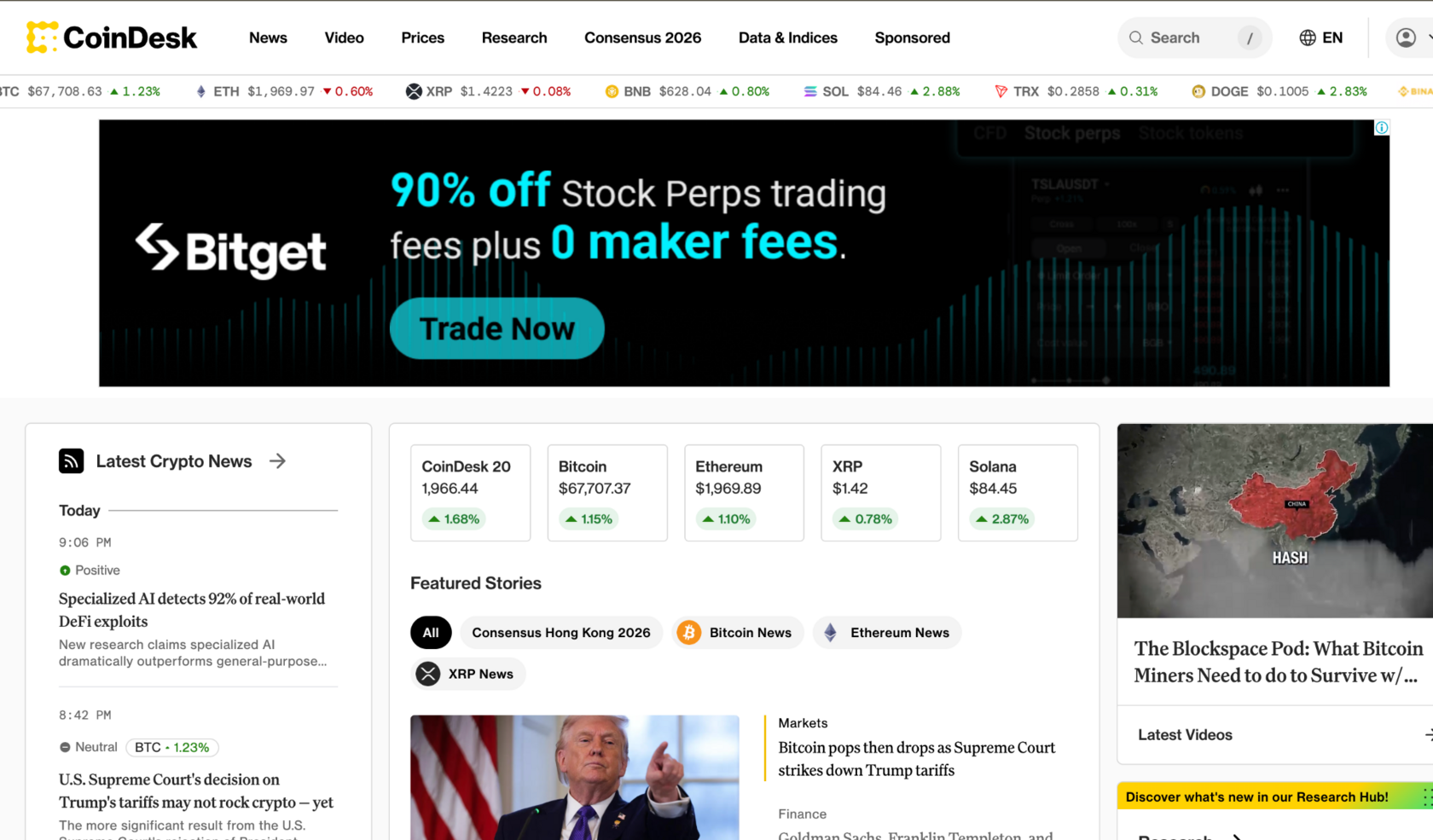
Launched in 2013, CoinDesk has built a reputation as one of the top and most referenced sources for trusted crypto news. Its coverage includes bitcoin, Ethereum, decentralized finance (DeFi), regulatory developments, and institutional markets. The company operates a large newsroom and publishes multiple proprietary data products and indices along with its journalism.
- Strengths: Timely delivery of news with regard to market-moving events, solid regulatory coverage, and institutional credibility.
- Limitations: Published by Bullish, which creates a structural conflict with the content, also has some sponsored materials.
- Best Used By: Those who are involved in trading or providing institutional services, tracking economic or regulatory developments.
Cointelegraph
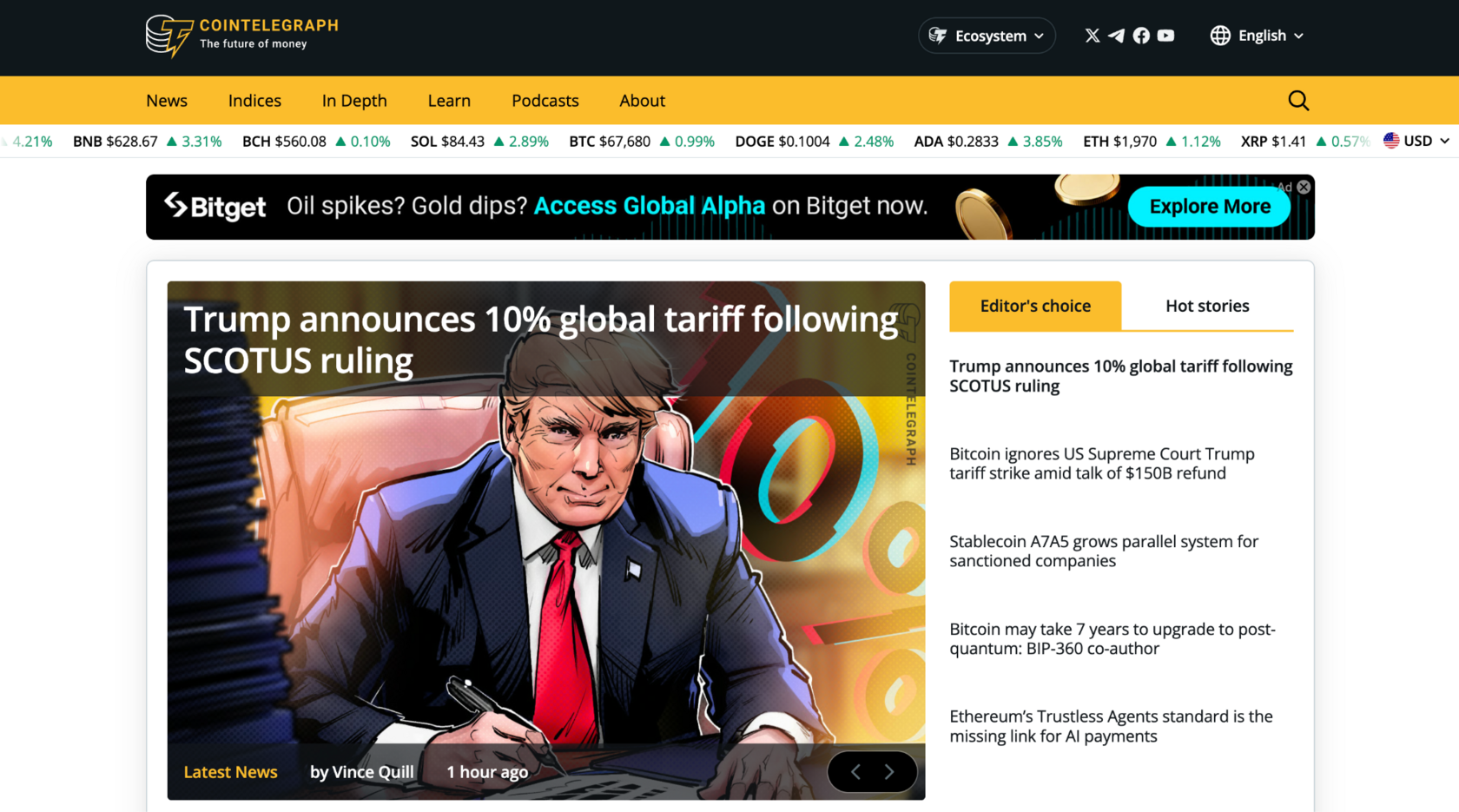
Cointelegraph has had its high-traffic global newsroom since 2013, covering Bitcoin, altcoins, NFTs, DeFi, and regulation in 15+ languages.
- Strengths: Wide topic range, high volume, beginner-friendly explainers.
- Limitations: Quality varies by writer.
- Best For: Readers wanting broad daily coverage across multiple sectors.
The Block
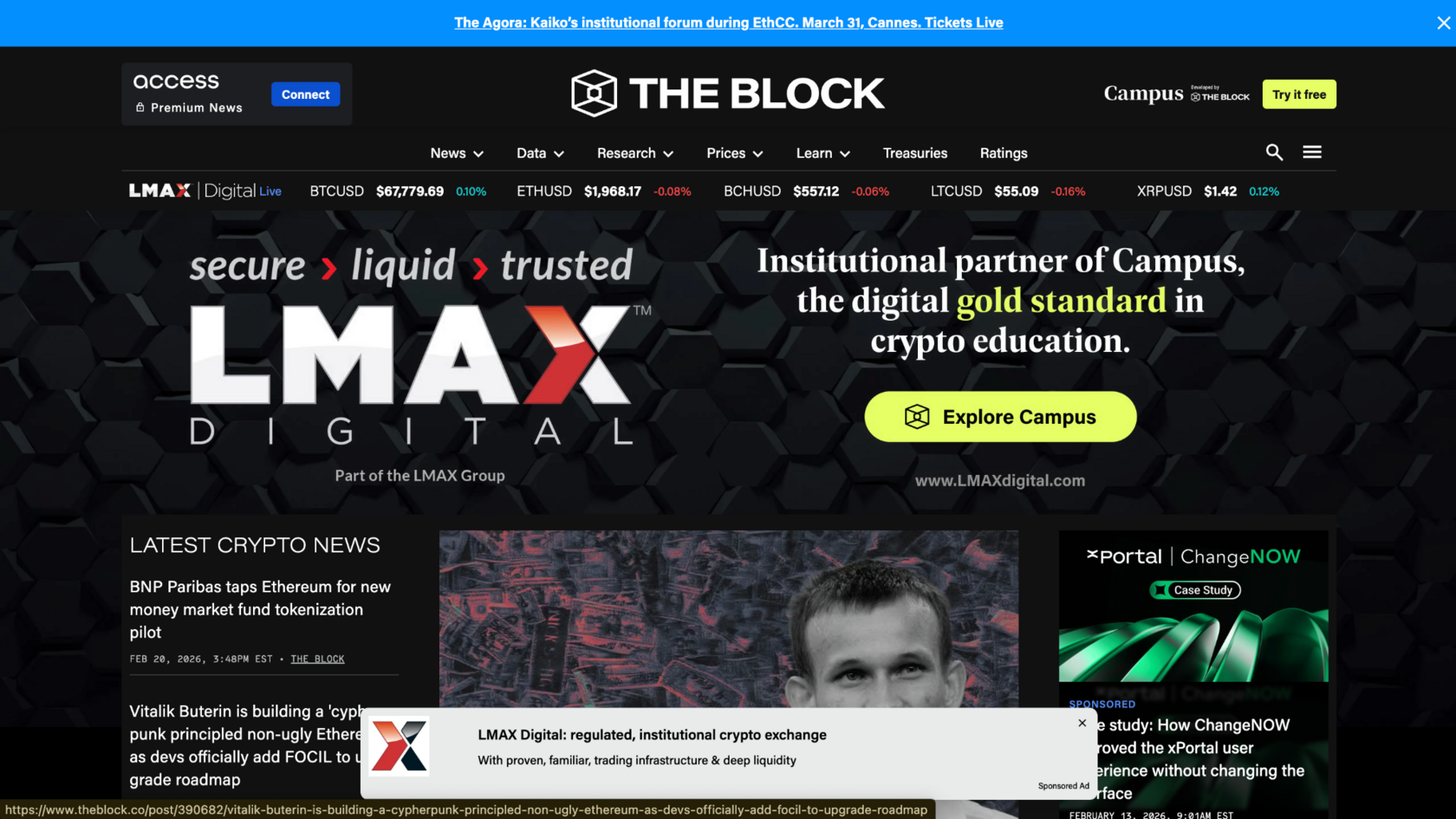
An investigative-first publication that combines a newsroom and on-chain data tools, along with analyst reports.
- Strengths: In-depth investigative articles, proprietary data dashboard, transparent methodology for sourcing material.
- Limitations: Some of the best research is available only behind a paywall; funding controversy in 2022 (addressed publicly).
- Best suited for: Analysts, fund managers, and builders who need evidence-based journalism.
Decrypt
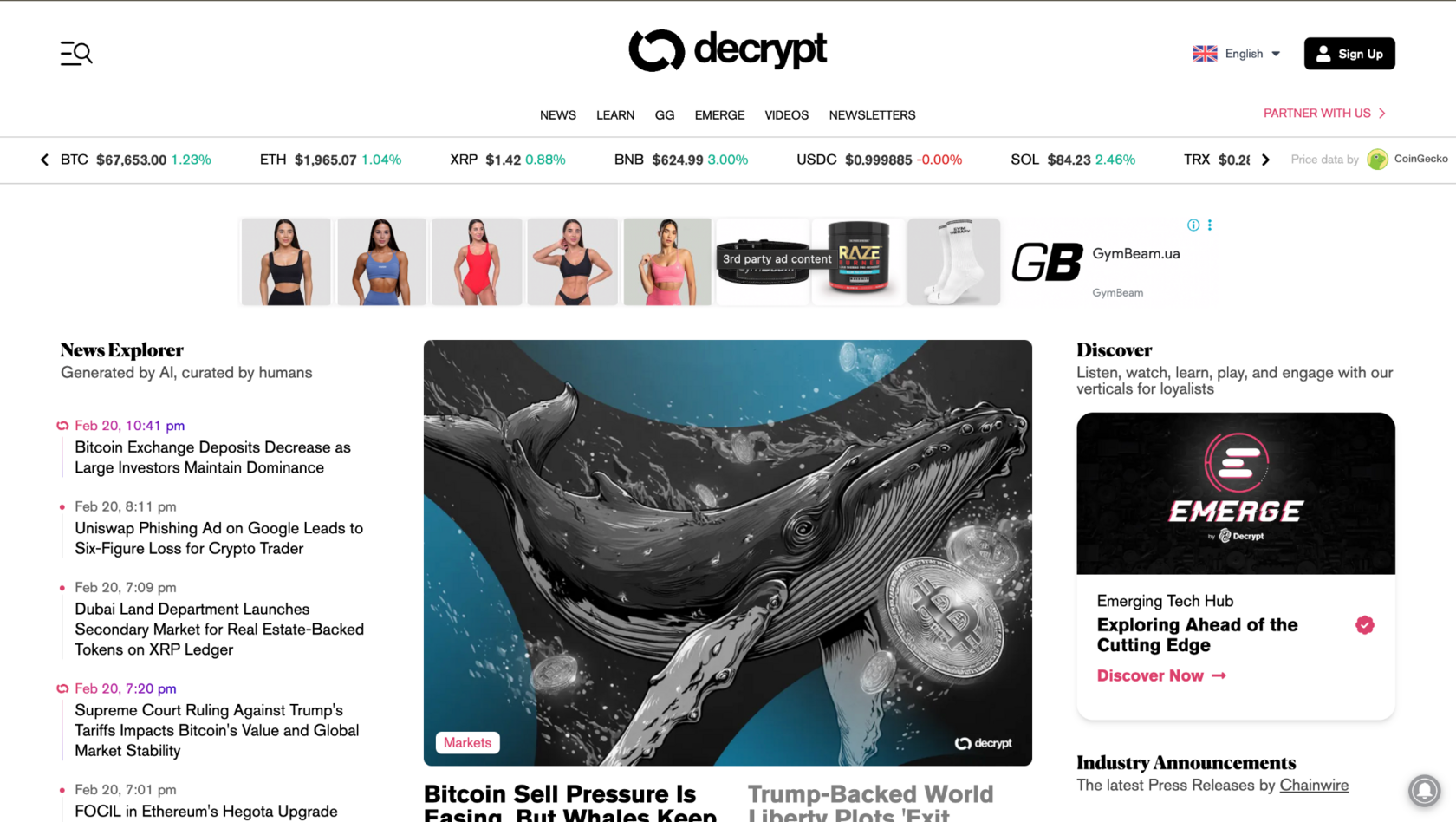
Founded in 2018 as an accessibility-focused publication, Decrypt aims to explain crypto clearly while covering NFT and Web3 culture.
- Strong Points: Readable writing, strong coverage of NFTs and gaming, and podcasts with regular content.
- Limitations: Much less depth in financial / on-chain-based analysis; narrative can often supersede data.
- Best Suited to: Crypto news for beginners, NFT collectors, web3 culture enthusiasts.
Blockworks
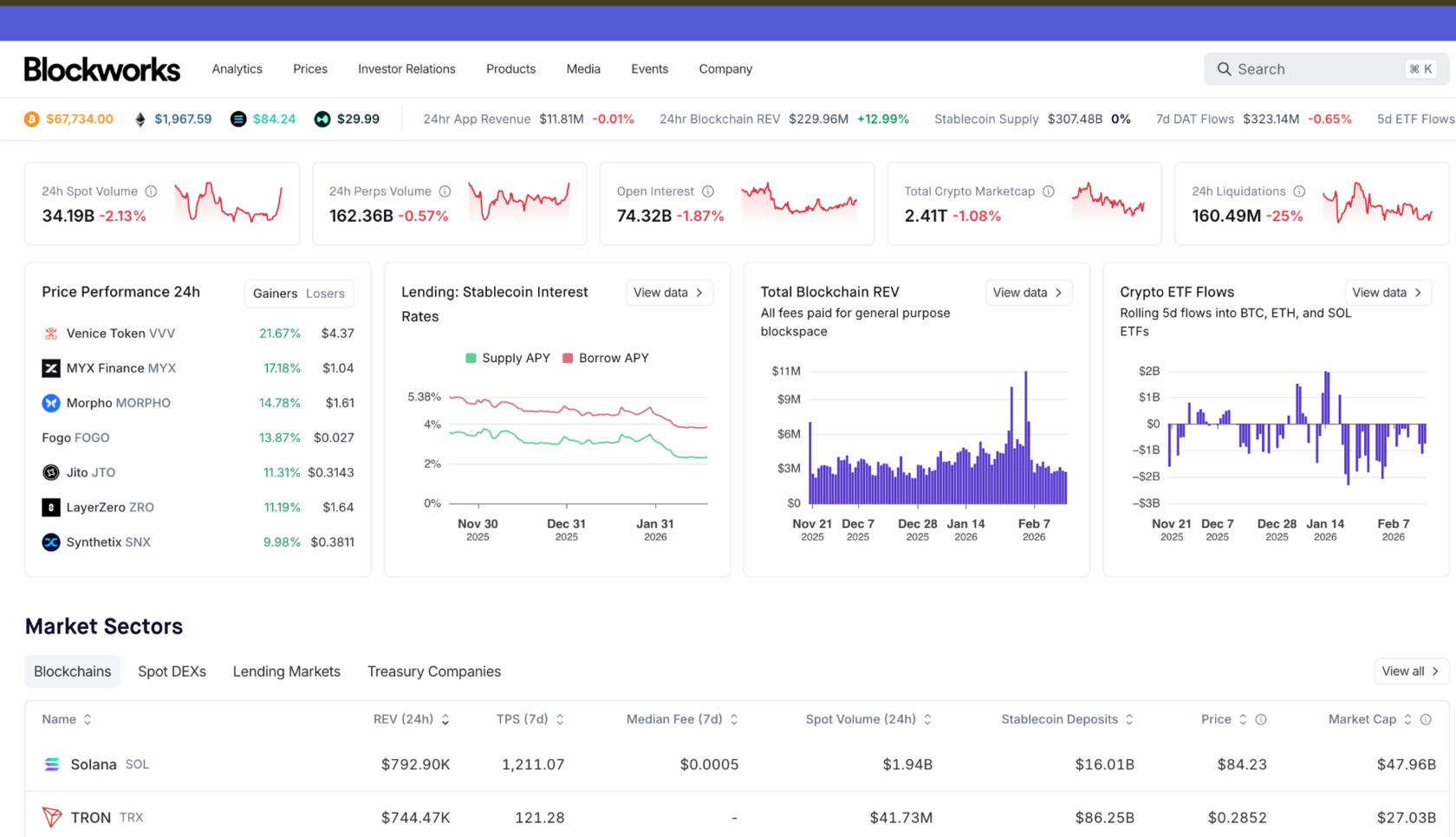
Full-scale media network on macro crypto finance and institutional DeFi with a substantial selection of shows/podcasts (Empire, Lightspeed, 0xResearch).
- Strengths: Editorial depth for macro and DeFi, excellence in independence, and growth in research creation.
- Weaknesses: Very little beginner content, US-centric point of view.
- Best suited for: DeFi power users, institutional readers/trackers, and macro-focused traders.
Bitcoin Magazine
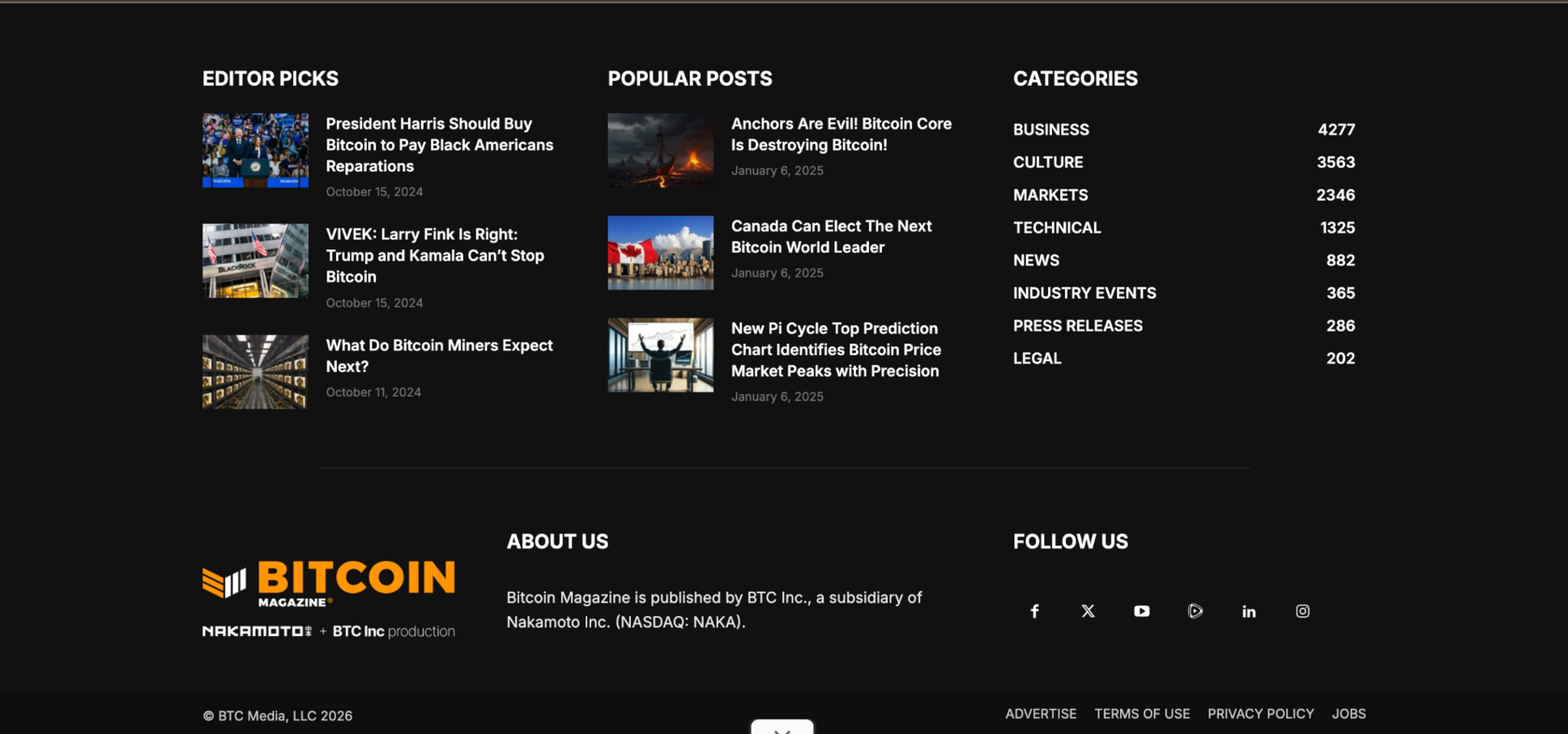
Bitcoin Magazine is the longest-running outlet in the space (since 2012), only covers Bitcoin (technology, economics, philosophy).
- Strengths: Extensive technical coverage of Bitcoin, credibility with the community, and comprehensive archives.
- Weaknesses: Deliberately narrow scope (i.e., by design), does not cover Ethereum, DeFi, or altcoins; clearly advocacy-based.
- Best suited for: Bitcoin developers, long-term holders, and readers of monetary philosophy.
BeInCrypto
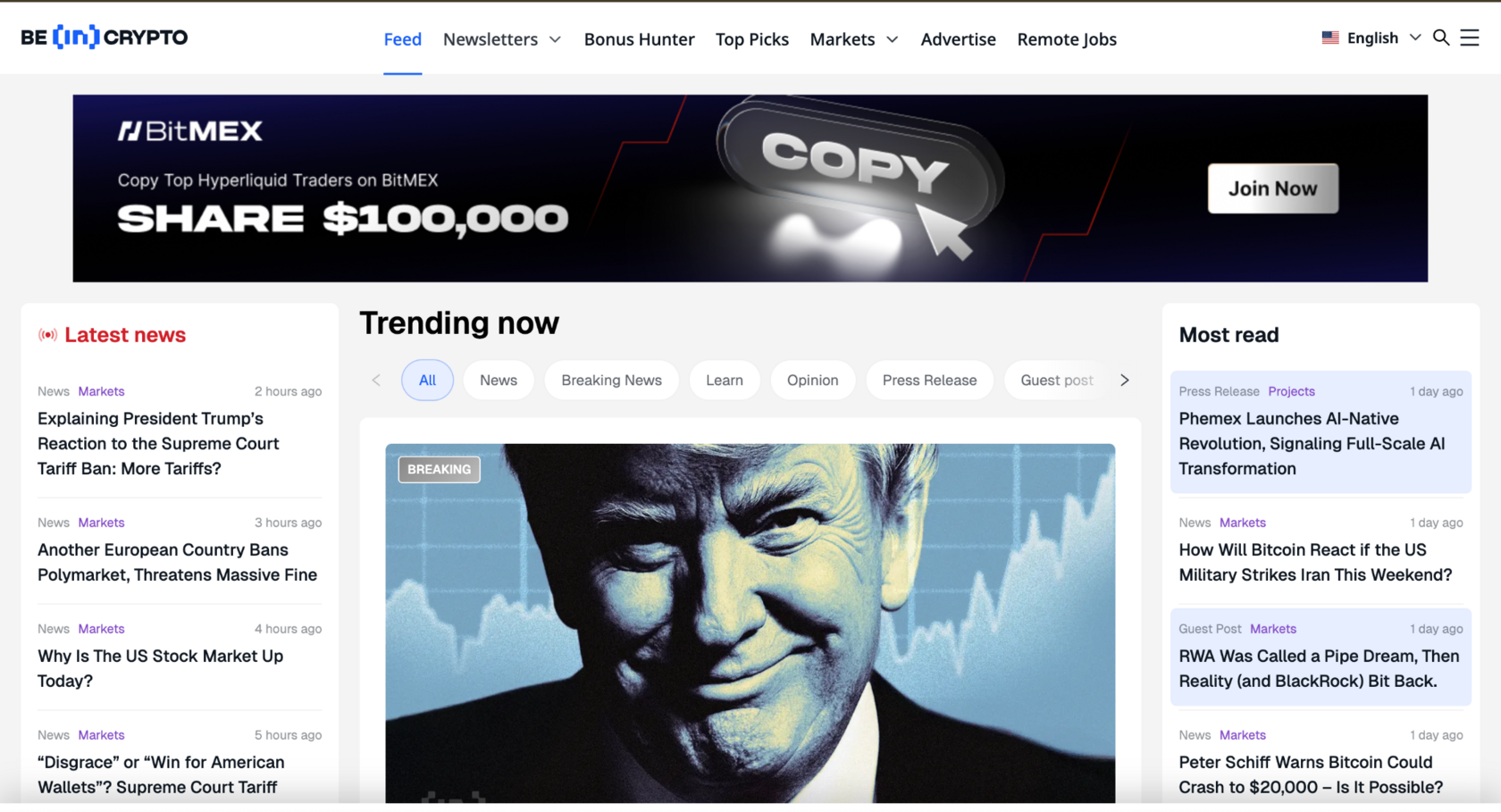
One of the few genuinely global crypto news platforms, publishing in 15+ languages with strong reach in Latin America, Southeast Asia, and Eastern Europe.
- Strengths: Multilingual reach, accessible educational content, strong in non-English markets.
- Limitations: High volume leads to uneven quality; some promotional content is present.
- Best For: Readers outside the US/UK and traders following altcoins in emerging markets.
CoinGape

A newsroom in India provides coverage of alternative coin price analysis, token launches, and updates from exchanges with a primarily South Asian audience.
- Strengths: Fast altcoin and listing coverage; good for tracking Asian market sentiment.
- Limitations: Promotional pieces are common; sourcing is less rigorous than top-tier outlets.
- Best For: Retail traders focused on altcoins and new listings.
U.Today
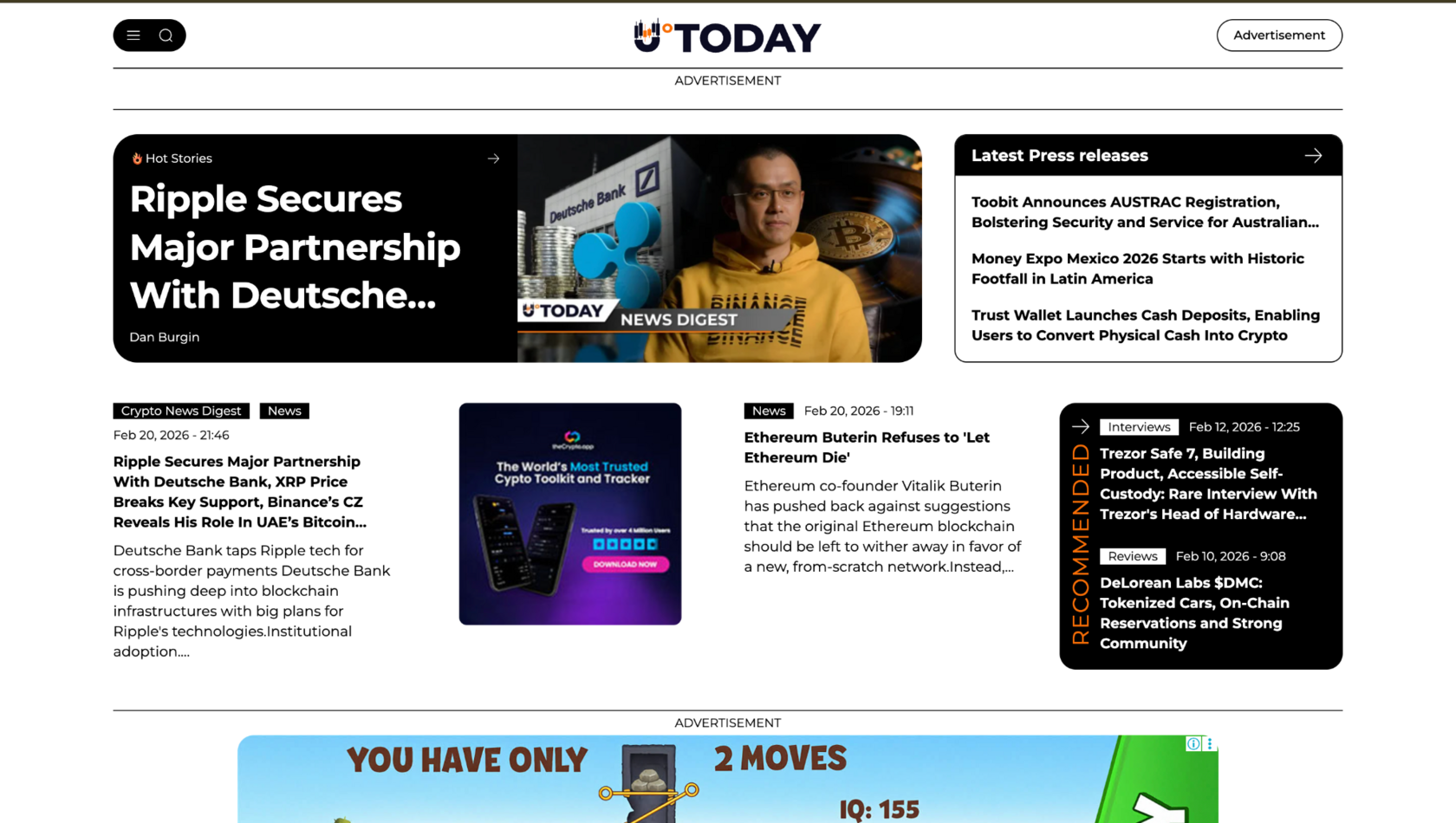
A high-volume publisher covering both Bitcoin and the leading altcoins specifically caters to a retail audience. It achieves this by publishing hundreds of articles each week.
- Strengths: They have quick coverage of pricing for the alternative coins as well as coverage of new alternative coin listings, which are great for tracking sentiment in Asia.
- Limitations: There are a large number of promotional articles published on their site, and sources for articles are not as rigorously verified as they are for leading publications.
- Best for: Retail traders who are interested in investing in alternative coins and newly listed alternative coins.
The Defiant

A DeFi-focused outlet founded by journalist Camila Russo that covers protocol mechanics, governance, and yield strategies.
- Strengths: The Defiant has a dedicated DeFi editorial voice, produces high-quality writing, and provides intelligent coverage of protocol and governance topics.
- Limitations: The Defiant has a narrower focus than traditional newsrooms, and some premium (subscription-based) content is gated.
- Best for: DeFi protocol users, governance participants, and protocol researchers.
Protos
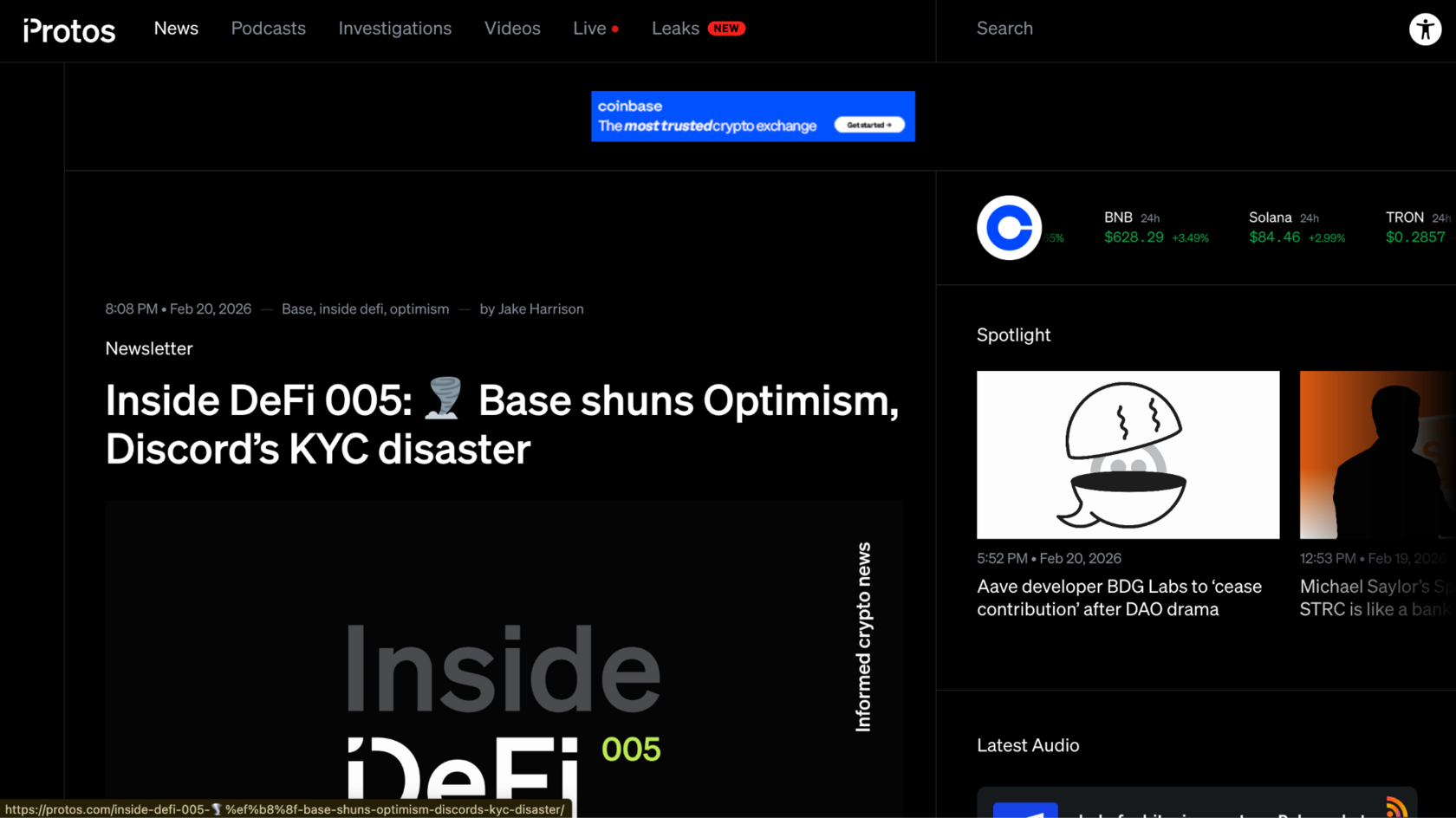
It is an independent publication that skeptically conducts investigative reporting. These investigations often cover stories with case studies of rejected bankruptcy filings, overhyped business ventures, and fraud that larger media outlets would tend to stay away from.
- Strengths: Independently published. Known for its investigative reporting. Offers an effective counter-narrative.
- Weaknesses: Smaller staff. Lower output in frequency of stories, meaning they do not typically produce news items for daily consumption.
- Best Audience: Readers who would like a counter-balance to the promotional accounts they typically read in larger publications.
Messari
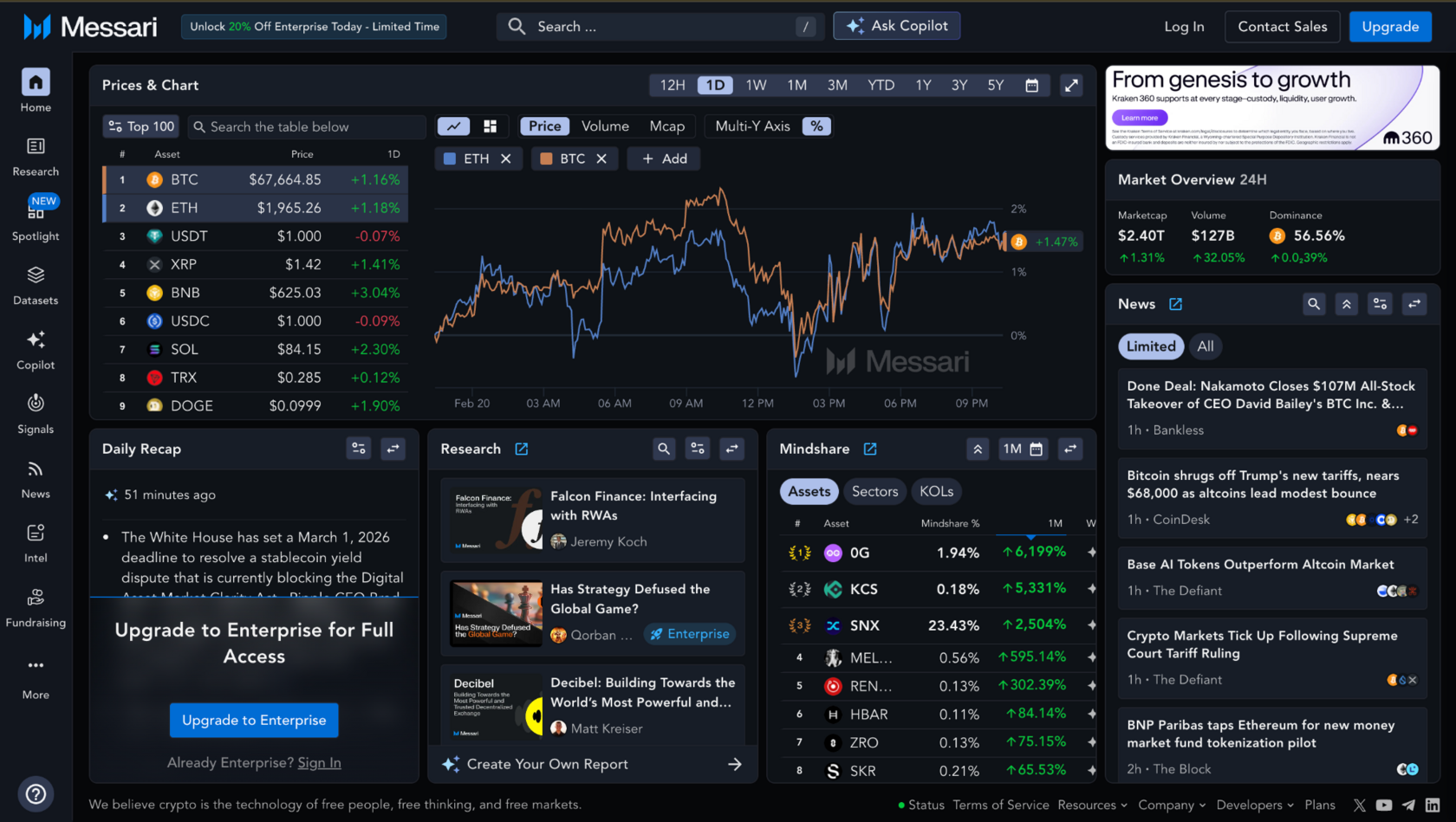
It is a research and analytics platform that produces token analysis, sector reports, and quarterly summaries of the state of the network. These outputs are often referenced by analysts as credible sources of information.
- Strengths: Data-driven, provides transparent methodologies. Cited frequently by other analysts as a reliable source of information.
- Weaknesses: The best information is only available to paying members. Not set up to create daily news materials.
- Best Audience: Analysts, fund managers, and project teams creating theses for potential investments or products.
How to Choose a Trusted Crypto News Website
Selecting a trustworthy crypto news source requires you to use the following criteria for each prospective source before adding it to your regular reading list:
- Ownership. If a news outlet is owned by a cryptocurrency exchange, fund manager, or cryptocurrency project, there are a number of structural reasons that create potential biases in coverage, even if individual journalists appear to work independently.
- Disclosure of sponsored content. You should not consider an outlet legitimate if they don't clearly disclose the nature of their sponsored content (e.g., by labeling it "sponsored", "paid post", "partner content", etc.). If you see a promotional article and it doesn't have one of these labels, it is a good indication that you should be cautious about it.
- Accountability for editorial content. If a news outlet has a history of correcting its articles, listing the author of an article (byline), and citing sources, these are all basic indicators of whether or not the outlet can be trusted.
- Past performance under pressure. You should look for how a news outlet reported on the FTX collapse or the LUNA/UST meltdown in both up and down market conditions. A news outlet that exaggerated the level of hype before either collapse should be read with great caution.
- Signal-to-noise ratio. If a news source has attractive headlines relying on price predictions or continuously produces "breaking news" articles, that is a signal that they are optimizing for generating clicks, not for producing information that is useful to their audience.
- Global perspective. If the news source is limited to covering only events that have occurred in North America, there may be a substantial amount of useful information and market opportunities that they won't be reporting on.
How to Build a Healthy Crypto Media Diet
More sources don’t automatically mean better insight. In crypto, too much input often just creates noise. A simple structure works best: one broad newsroom to keep you updated on what’s happening, one analytical outlet to explain why it matters, and one research layer for deeper context.
Fast news tells you what happened. Analytical coverage tells you why it matters. Research helps you understand whether it changes anything long-term. On X, Telegram, or Reddit, assume everything is unverified until proven otherwise. These platforms are excellent at surfacing information early – and equally good at amplifying rumors, coordinated promotions, and half-true narratives. Speed is not the same as accuracy.
When major news breaks, resist the urge to react instantly. Early reports in crypto are often incomplete. Wait for at least two independent editorial outlets to confirm key facts before forming a strong opinion. And most importantly, deliberately include one skeptical voice in your feed. Crypto consensus can turn uniformly bullish very quickly. Reading at least one outlet or analyst willing to question the narrative helps you avoid getting pulled into echo chambers.
Working With Crypto News Websites as a Project
For founders and marketing teams, crypto news outlets are a credibility channel. Most pitches fail because the story is framed around internal milestones rather than editorial relevance. What gets coverage: verifiable milestones, real numbers, and a named source. What gets ignored: generic press releases with no data.
FINPR specializes in helping crypto and Web3 projects with PR strategy, media outreach, and placement in major crypto outlets such as CoinDesk, Cointelegraph, The Block, Decrypt, Blockworks, and other regional outlets worldwide. If you want your project to be in a credible crypto news outlet, not through paid distribution, use FINPR Agency.

