

Many heard about it, but few impemented it. We talk about Web3 content plan: how to create it, structure, and what it might look like.
A 30 day content plan turns your social media into a system. You’ll mix education, product moments, community posts. Proof in a way that feels natural and keeps your audience attention.
Below, we will analyze various aspects, and at the end, you will receive a template for such a plan from our practice with clients, which we use in various Web3 projects.
Before You Plan: Define the Outcome
Of course, before launching a large-scale campaign to produce regular content, you first need to determine: what your ultimate desired outcome is. It could be new subscriptions to your socials, lead generation, or simply transition to the services page / your contacts, or certain metrics (you also need to set them so you can track them later).
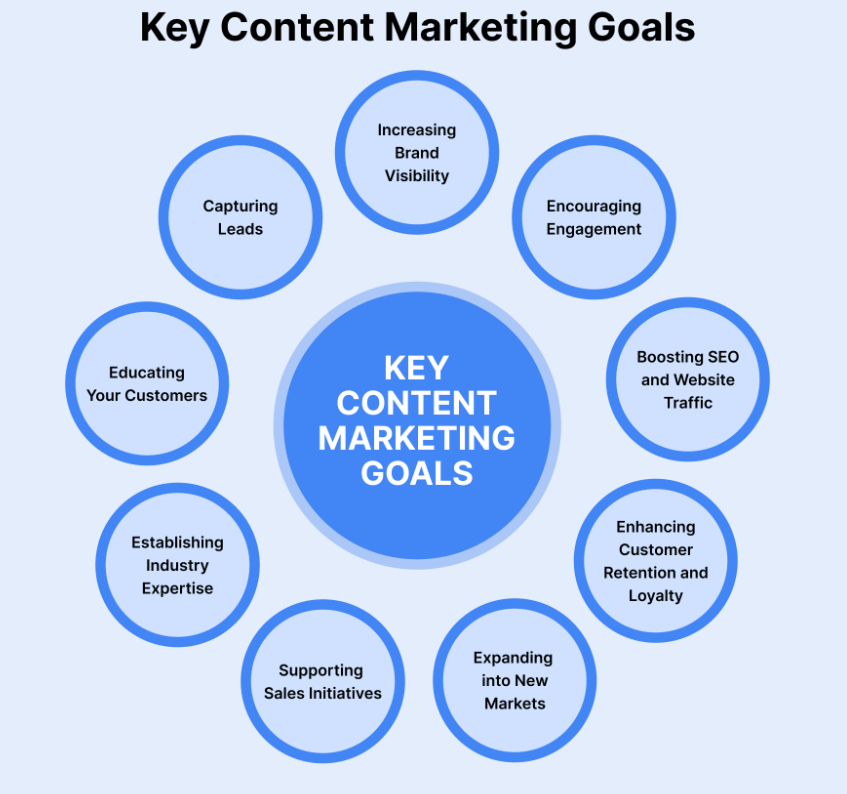
If your goal is growing your community, track your follower growth and engagement rates (likes, comments, shares). If you want to drive traffic to the site, watch your click-through rates.
You can also focus on future engagement, i.e., the reach of your articles and posts.
Let’s describe it more concrete:
- Community growth: You want to build a group of people who are excited about what you're doing. This could mean getting more followers on your social channels, sparking interesting conversations, and making people feel like they're a part of something special;
- Brand recognition: You want people to know your project's name and what you're all about (getting your content in front of as many relevant eyeballs as possible);
- Traffic to your site or app: A good content plan can help you guide people to your website, where they can learn more and get involved;
- Educating your audience: Your content can be a powerful tool to explain complex ideas in a simple and engaging way. This helps build trust and positions you as an expert in your field. And it’s useful for EEAT site signals for Google search engines.
Choose Your Channels
Now, where do you actually talk to people? You don't need to be on every app. You need to be in the right places for your project.
I like to split this into two simple groups:
Your Daily Hubs (Pick 1-2)
These are your main stages. The places you'll show up consistently, almost every day. You're building a regular presence here.
- X (Twitter): This is still the town square for Web3. It's where news breaks, threads explain ideas, and conversations happen in real time. If your goal is about building a following or driving quick action, you're probably here. It's great for updates, engaging directly with people, and jumping into trends.
- Discord/Telegram: Your daily activity here is less about posting content and more about facilitating conversation, answering questions, and being present. This is where your community lives. Over the past few years, Telegram has become even more popular in the crypto space, so you should definitely use this platform for your business (if you haven't already created a page there). That's where you'll find a large Web3 audience thanks to Telegram's various features and functionality.
- Farcaster and Lens: These are the new kids on the block - decentralized social platforms. They are built on Web3 principles, and a lot of the early adopters and builders in the space are active there. Getting in early could be a great way to connect with a super-relevant audience.
- Reddit: Don't sleep on Reddit! There are some very specific and super-engaged communities (called subreddits) focused on different parts of crypto and Web3. If you can find the right ones and provide real value, you can connect with a very passionate audience.
Your Weekly Spots (Pick 1-2)
These are for deeper, slower, or more polished content. You don't need to haunt these daily.
- LinkedIn: Perfect if you're targeting enterprise users, investors, or professionals in the space. A detailed post once a week about your project's progress or the problem you solve can work really well here.
- Blog: We believe that this is a must-have because it offers a number of advantages. You will be able to create SEO-optimized pages for specific keywords in your niche. Google itself will also see that you are creating useful content and, in principle, will be able to use your blog to display your pages in keywords related to your services. A blog can help with this in general. You can get a consultation and know more about SEO with our experts.
- Instagram, YT Shorts or TikTok: People come here more for the visual component. If you have something to show, you can regularly create beautiful images and video graphics. This is still relevant, especially for attracting new audiences through the algorithms of these platforms with short video formats (shorts, reels).
Create Your Weekly Content Structure
Start by dividing the week into themes that match your goals. For example, if you want to raise awareness for your blockchain app, you could use Mondays for quick facts or updates, Wednesdays for user stories or polls, and Fridays for fun recaps or teasers.
Change up your posts to keep things interesting for your followers. Use different formats: some days share short videos that explain features, other days post text threads about market trends, or images that highlight milestones. This variety helps boost interaction because people lose interest if they see the same style all the time.
The Content Types That Work Best in Web3
Web3 is a funny space. Most Web3 content feels like shouting into a hurricane. Generic project updates, stock photos of robots, vague "to the moon" hype - it all blurs together.
People move fast, they’re skeptical by default. So the content that wins here isn’t the prettiest or the most polished - it’s the stuff that feels real, useful, and confident.
Here are a few formats that consistently get a great response:
- Educational Threads: Here you can regularly talk about how your product works, showcase your services, describe the current stage of your project, share your future plans for attracting investment and expanding your team, explain how to use your platform, describe your tokenomics, and so on.
- Simple Visuals and Infographics (Visual Proof of Work): Simple charts, graphics, and infographics that break down your roadmap, explain your tokenomics, or compare different solutions are incredibly shareable. People love content that makes them feel smarter. Screenshots. Code snippets. UI mockups. Anything that shows real, tangible progress. This builds more trust than a hundred announcements saying "coming soon". It shows you're building, not just talking.
- Memes, but Make Them Smart: You might think memes are just for laughs, but in Web3, they're a core part of the culture. A good meme shows that you're in on the jokes and you understand the community's mindset. It's a super effective way to show off your project's personality and connect with people on a more human level. At the same time, you don't necessarily have to mention your product in memes; you can talk about some current news agenda related to your niche. The audience will definitely pick up on this thanks to reposts of the publication.
- Long-Form Articles: While your social channels are for the day-to-day conversation, you still need a home for your bigger ideas. Writing articles on a blog or a Web3-native platform like Mirror gives you the space to fully flesh out your vision, share major updates, and post thought-leadership pieces. You can then break down these articles into smaller chunks for your social posts.
Mixing it up. Don't just post threads every single day. Keeping your feed fresh and interesting is how you keep people coming back for more.
Ready-to-Use 30-Day Content Calendar Blueprint
You can use the template from our practice by following the link below.
https://docs.google.com/spreadsheets/d/1-QSkdW-ocsMawxHlGrARzvt92SoX0MLiznay5dlM6dA/edit?usp=sharing
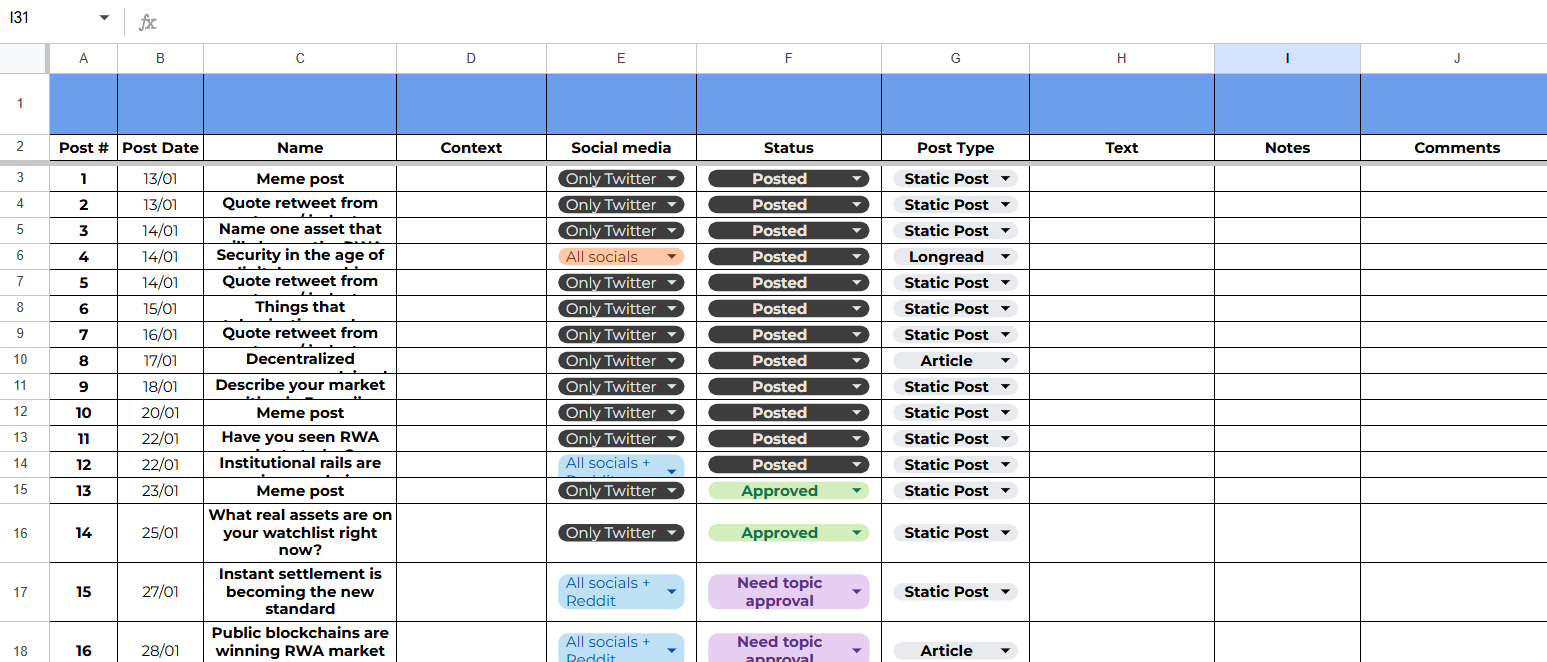
It is generalized, but it can be adapted to your needs. In other words, you can copy the file and edit it specifically for your project.
Wrapping Up
A good 30-day plan fixes the chaos. You pick an outcome, choose your channels, build a weekly rhythm, and repeat content types that people actually respond to. After that, content stops being a daily headache and becomes a routine you can manage.
This was just a small part of your overall content strategy that you can implement in the coming days. It is always important to structure how you produce online content. But you should also not forget about social media management, management in general, keeping your past articles relevant (if you have a blog), SEO optimization, and fact-checking when preparing your posts. All of this together will definitely yield results.
And if you want help turning this into a content calendar that fits your project, that’s what we do at FINPR. We build Web3 content systems that feel human, stay consistent, and bring in the right users.

