

Summary
Real-world assets (RWAs) in crypto basically mean putting real things (US Treasuries, property, gold, or loans) in the blockchain as tokens.
- They give you income referred to actual cash flows instead of ordinary crypto online coin.
- Big draw right now: traditional assets are attractive again for higher interest rates, at the same time blockchain makes access faster and easier.
- Listed projects: Ondo Finance for Treasuries, Centrifuge and Goldfinch for private credit, Maple for institutional lending, RealT for real estate slices, PAX Gold for physical gold, Backed for tokenized securities.
- Benefits: diversification, programmable money, less wild swings than typical crypto.
- Cons: risks move to legal status, regulation, issuers going bust, KYC requirements.
Short point to note: RWAs feel like the bridge of boring finance and crypto, but you gotta watch the off-chain parts closely.
RWA crypto coins are blockchain tokens backed by real-world assets such as US Treasuries, real estate, gold, and private credit, shifting risk from smart contract vulnerabilities to legal, issuer, and regulatory exposure. Top projects in 2026 include Ondo Finance for treasuries, Centrifuge for private credit, Maple Finance for institutional lending, RealT for real estate, and PAX Gold for gold.
Investments should be screened for issuer jurisdiction, custody of underlying assets, cost models, redemption mechanisms, and possible securities status. These securities are complementary investments that provide yields with blockchain settlement advantages but simply shift risks from code-based failure to other sources.
Real-world asset (RWA) crypto coins have undergone a substantial change in how they are established and traded within the crypto ecosystem, and by 2026 will represent one of the largest structural shifts in crypto. RWA tokens are backed by real-world assets, including commodities, government bonds, private credit and real estate, as well as being designed to serve as a link between traditional financing and blockchain technology.
Unlike DeFi tokens, RWA tokens will not be purely on-chain; instead, RWA tokens will rely heavily upon legal structures, custodian services and enforceability off-chain, which results in a different risk profile than what people commonly think. The majority of RWA tokens have been promoted as providing “safer yields”, although the true tradeoff is from the smart contract risk to legal, issuer and regulatory risk.
This article will provide an overview of what real world asset tokens are, their implications in the future, and how to evaluate RWA crypto coins appropriately. Additionally, it will review some of the most popular RWA tokens on the market, which are all represented by different asset classes. Lastly, this article will provide an overview of how FINPR works with RWA tokens and how it can help educate clients about complex tokenization discussions.
What Are RWA Crypto Coins (Real-World Asset Tokens)?
RWA crypto coins (Real World Assets) are essentially blockchain-based coins that represent the value or economic interest of physical assets – those that do not exist within the cryptocurrency ecosystem. Physical assets include U.S. Treasuries, corporate bonds, real estate, commodity assets such as gold, and also mortgages and other private credit instruments.
RWA crypto coins typically do not function as ownership certificates for the asset. RWA tokens represent contractual rights on behalf of the legal entity that has either direct ownership or is an agent for the asset itself. Therefore, RWA tokens 2026 are very centralized compared to other DeFi assets, as the holders have a reliance on laws governing contract enforcement as opposed to the contract surrounding the Token being executed solely by smart contracts.
Typically, RWA Token issuers go through several steps to create a legal wrapper for their assets, which can take the form of a special-purpose vehicle (SPV), trust, or fund. The legal entity will acquire the actual physical or economic rights to the real-world asset. The RWA Tokens representing the asset's economic rights will then exist on-chain. The real world asset tokens can be traded or used in DeFi depending on jurisdiction and regulatory requirements.
Why RWA Tokens Matter in 2026
The renewed relevance of RWA tokens in 2026 is closely tied to macroeconomic conditions. After years of low interest rates, traditional assets such as government bonds and money-market instruments began offering attractive yields again. Tokenization allows these yields to be accessed on-chain, often with faster settlement and broader geographic reach.
Institutional adoption has also played a critical role. Asset managers, fintech firms, and banks have increasingly experimented with tokenized real estate crypto, on-chain bond issuance, and blockchain-based settlement systems. For these players, RWA crypto coins are less about speculation and more about operational efficiency, transparency, and programmability.
From an investor perspective, the RWA narrative represents a shift away from purely reflexive crypto yields toward cash-flow-backed returns. This has appealed to market participants looking to balance volatility with exposure to assets that behave more like traditional finance instruments. At the same time, expectations around “safety” often exceed reality.
It is important to understand that RWA tokens introduce a different risk mix rather than eliminating risk entirely. While on-chain transparency may improve, legal, regulatory, and counterparty risks become central. By 2026, understanding these trade-offs has become a baseline requirement for anyone engaging with RWA crypto coins.
How to Evaluate RWA Crypto Coins Before You Touch Them
To properly evaluate RWA crypto coins, an investor must also examine off-chain factors along with on-chain metrics like smart contracts and tokenomics when comparing opportunities in this sector. Retail investors are typically ill-prepared for the complexities of RWAs because they only think of on-chain elements.
The first thing to determine is the issuer of the RWA token and what country or countries' laws and regulatory framework governs the issuer. As part of this process, investors should locate comprehensive information on an issuer's jurisdiction and legal structure (i.e., types of entities). If an issuer cannot be clearly identified or if its jurisdiction is unclear, the risk profile of that token will be at least mid-level and potentially very high regardless of the design and quality of its on-chain elements.
Key items for investigation include:
- Make clear which entity operates, thus declaring the jurisdiction and legal wrapper associated with the token.
- Confirm what the token is backed by, including what underlying assets it has and who controls those assets.
- Understand the yield and the embedded fee structure.
- Determine whether there is a reliable means of liquidating tokens during normal conditions, and how much they may cost to redeem.
- Finally, look at the potential for the token classification as a security based on regulatory compliance.
Top RWA Crypto Coins to Watch in 2026
The list of significant RWA Cryptocurrency examples by asset category is highlighted here; this is not a ranking or recommendation. Each example shows a different method for tokenizing Real-World Assets and managing risk.
Ondo Finance (ONDO) — Tokenized US Treasuries
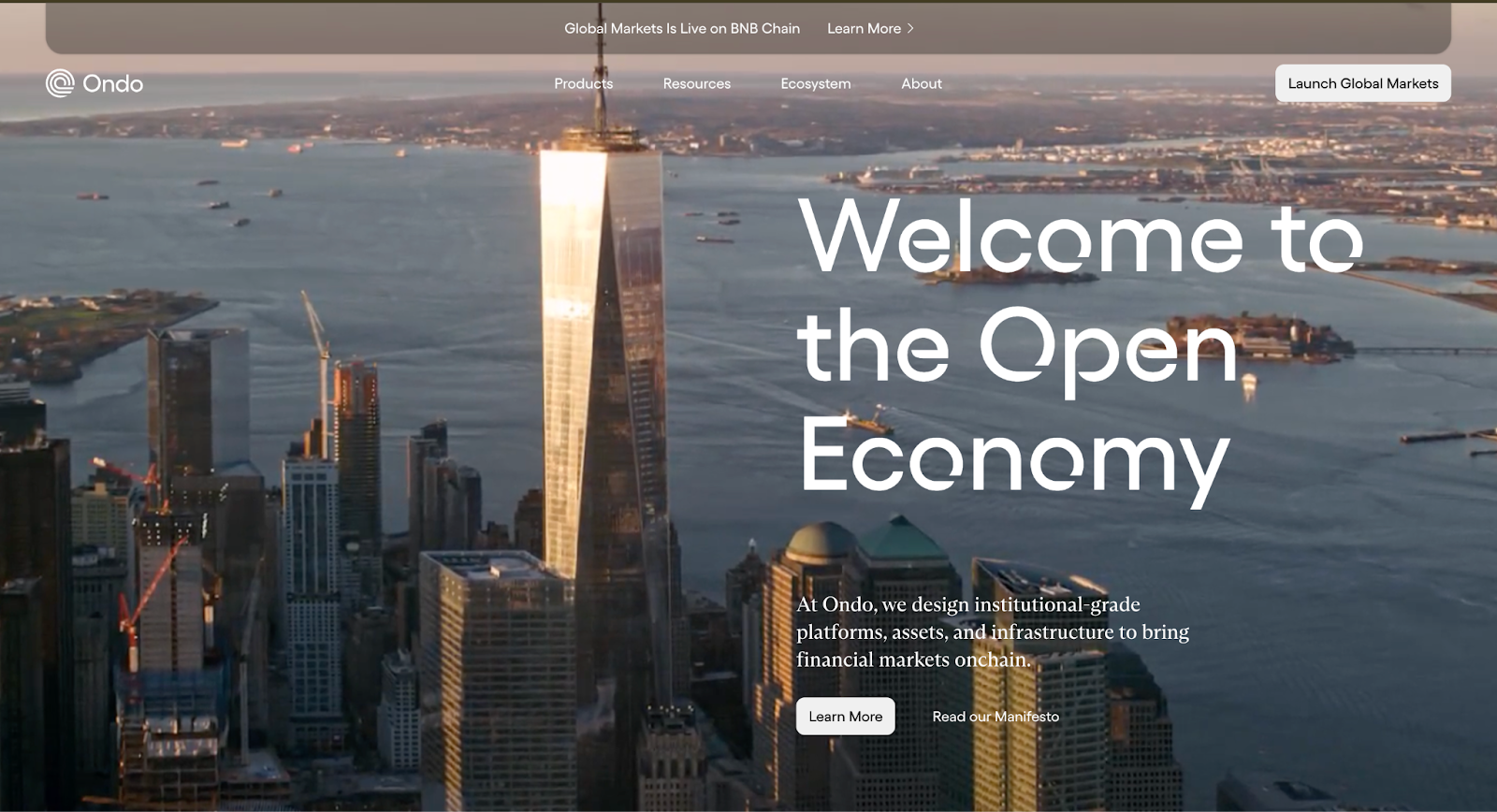
Ondo Finance aims to offer an easy way for users to invest in a market that has historically been dominated by institutional investors but now can be accessible through this innovative method. Users will have the inherent trust between themselves and the issuer (government while at the same time being able to see where their money is held, what they earn in interest, etc. Since there are currently no pure crypto approaches for investing in these types of products, Ondo Finance provides a unique solution.
You will know exactly what your returns will be (no more guessing) when investing in Ondo Finance through any legal means such as an exchange or a digital wallet service. Users can find information on the yields, terms, conditions, and how-to-use; on their website and through their support staff. Ondo Finance's goal is to enable individual investors to gain access to the same financial services and returns that larger institutional investors do. Ondo Finance snapshot:
You will know exactly what your returns will be (no more guessing) when investing in Ondo Finance through any legal means such as an exchange or a digital wallet service. Users can find information on the yields, terms, conditions, and how-to-use; on their website and through their support staff. Ondo Finance's goal is to enable individual investors to gain access to the same financial services and returns that larger institutional investors do. Ondo Finance snapshot:
Centrifuge (CFG) — Tokenized Private Credit
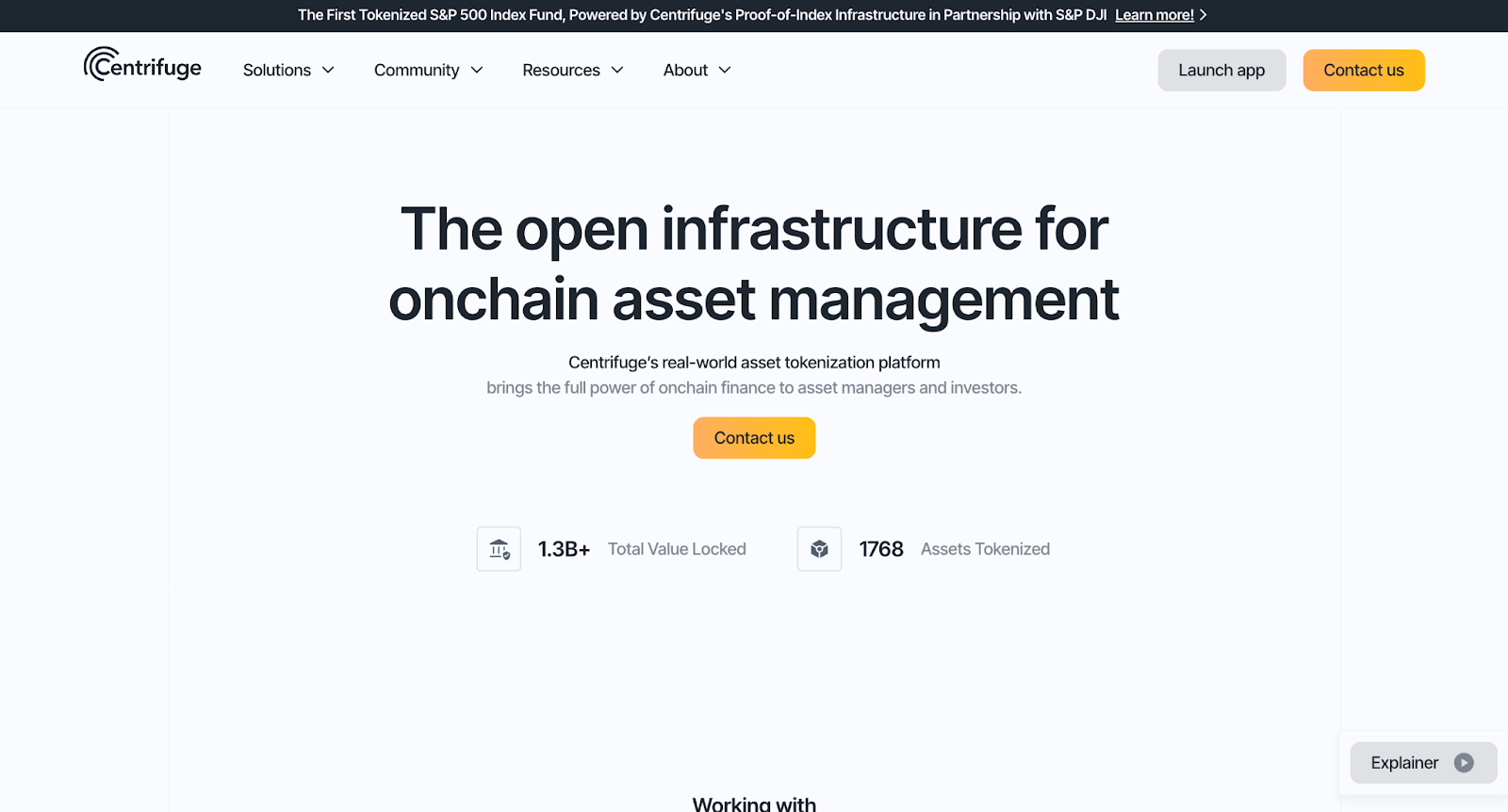
Centrifuge enables businesses to tokenize invoices and private credit instruments, allowing them to raise capital through on-chain pools. These assets are inherently more complex than treasuries and require deeper credit assessment. The protocol connects real-world borrowers with DeFi liquidity providers.
In this model, yield comes from borrower repayments rather than market appreciation. While this can create attractive returns, it also introduces default risk and legal enforcement challenges. Centrifuge illustrates how RWA crypto coins can extend beyond passive assets into active financing.
Maple Finance (MPL) — Institutional On-Chain Lending
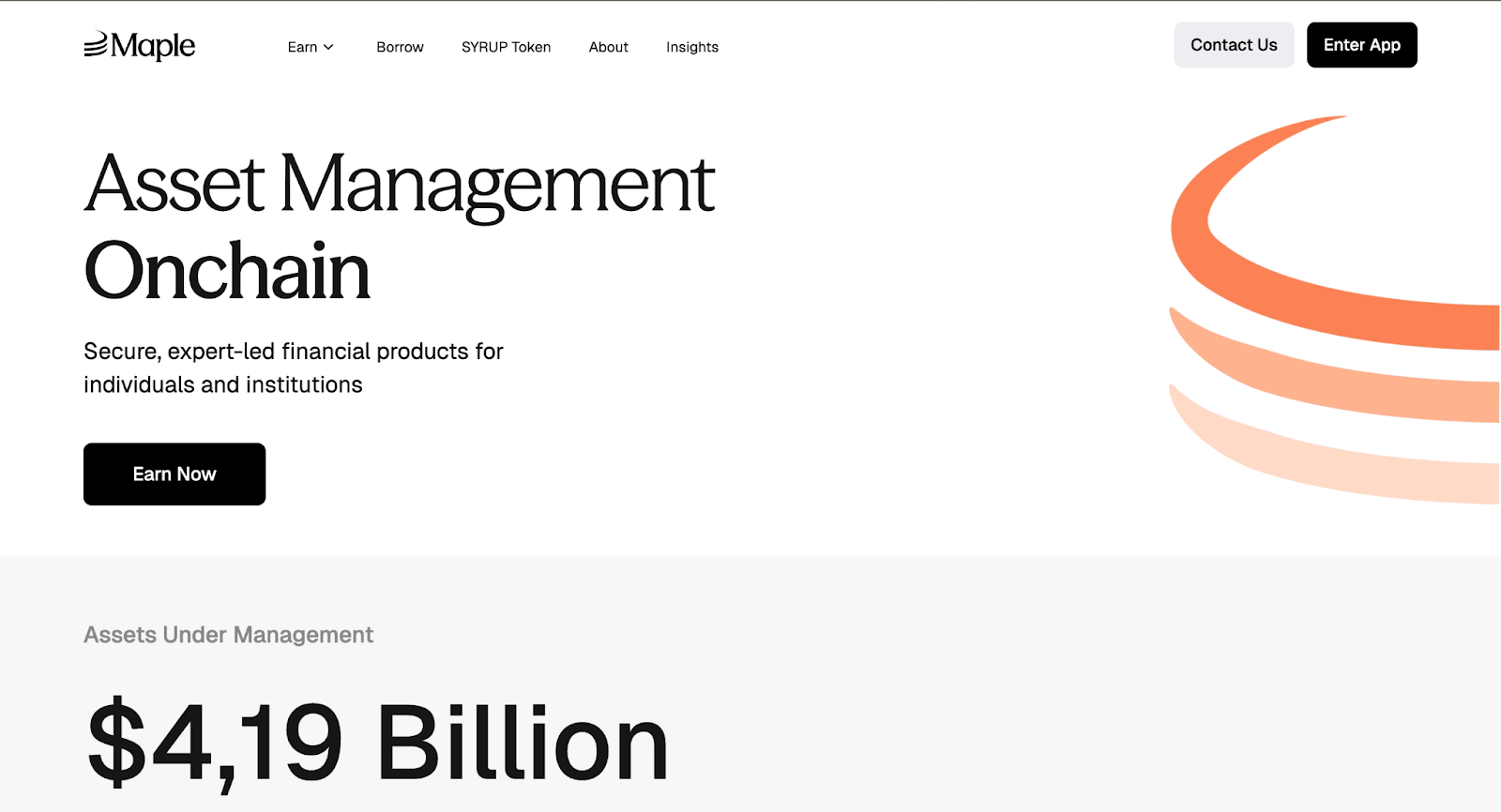
Maple Finance is a lending pool that runs on the blockchain and primarily services the needs of institutional customers. Loans are administered via off-chain agreements, while the funds used to finance the loan are transferred through the blockchain. This allows for a quicker loan settlement compared to traditional methods and still maintains the traditional lending process.
Maple Finance is an example of how Real World Assets can be used as the underpinnings of institutional credit rather than simply as investment vehicles for consumers. The risk associated with this type of lending is based on the creditworthiness of the borrower and the governance of the lending pool rather than exposure to coding vulnerabilities.
RealT — Tokenized Real Estate
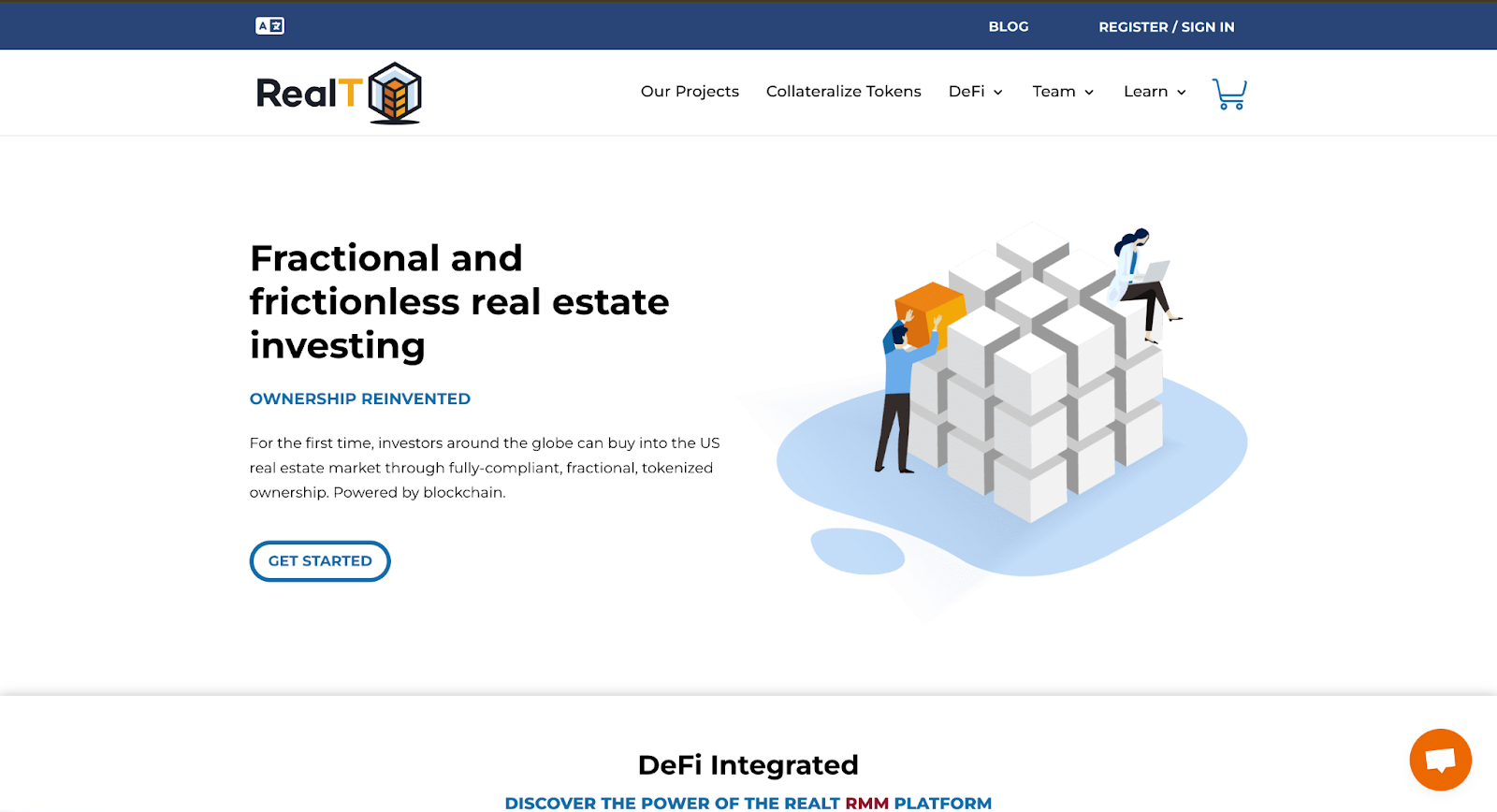
RealT allows individuals to invest in a share of real estate properties by tokenizing ownership interest of each individual property (in most cases these are residential properties). Each property is held in a legal entity, and the tokens represent the right to receive rental income from that property. By tokenizing real estate, individual investors have access to the investment market for real estate that would normally require substantial capital.
Because of the limited liquidity of tokenized real estate as compared to more liquid forms of financial assets, and because of the legal exposure associated with property management and statutory laws regarding real property in different jurisdictions, investors must be aware of both the potential benefits and limitations of this type of investment. Real estate tokenization snapshot:
Because of the limited liquidity of tokenized real estate as compared to more liquid forms of financial assets, and because of the legal exposure associated with property management and statutory laws regarding real property in different jurisdictions, investors must be aware of both the potential benefits and limitations of this type of investment. Real estate tokenization snapshot:
PAX Gold (PAXG) — Tokenized Gold
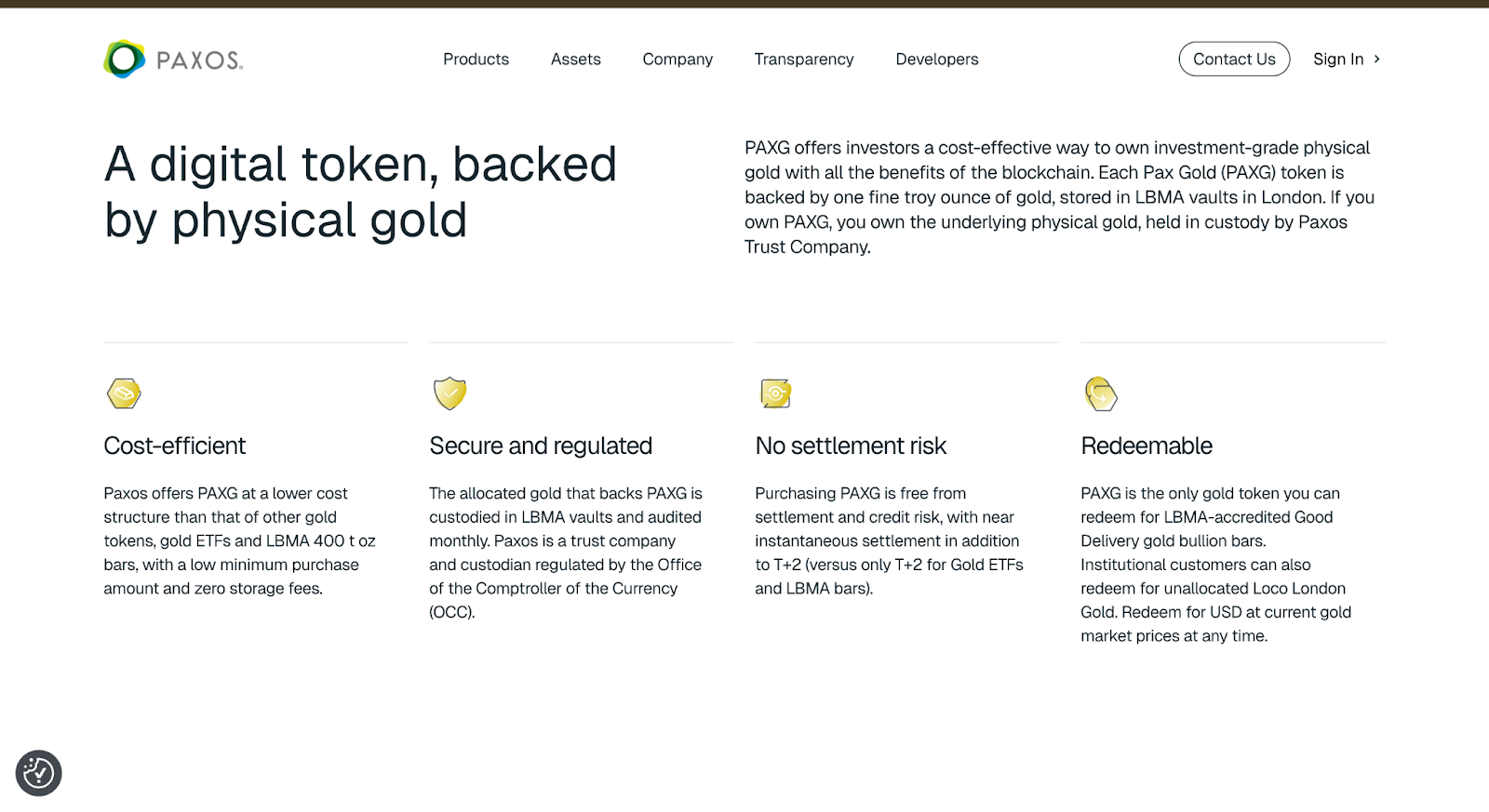
PAX Gold represents ownership of physical gold stored in professional vaults. Each token corresponds to a specific quantity of gold, combining commodity exposure with blockchain transferability. This model is often used for portfolio diversification rather than yield.
The primary risks relate to custody and redemption logistics rather than market volatility. PAXG demonstrates how simple, well-understood assets can be tokenized with relatively low structural complexity.
Backed Finance — Tokenized Securities
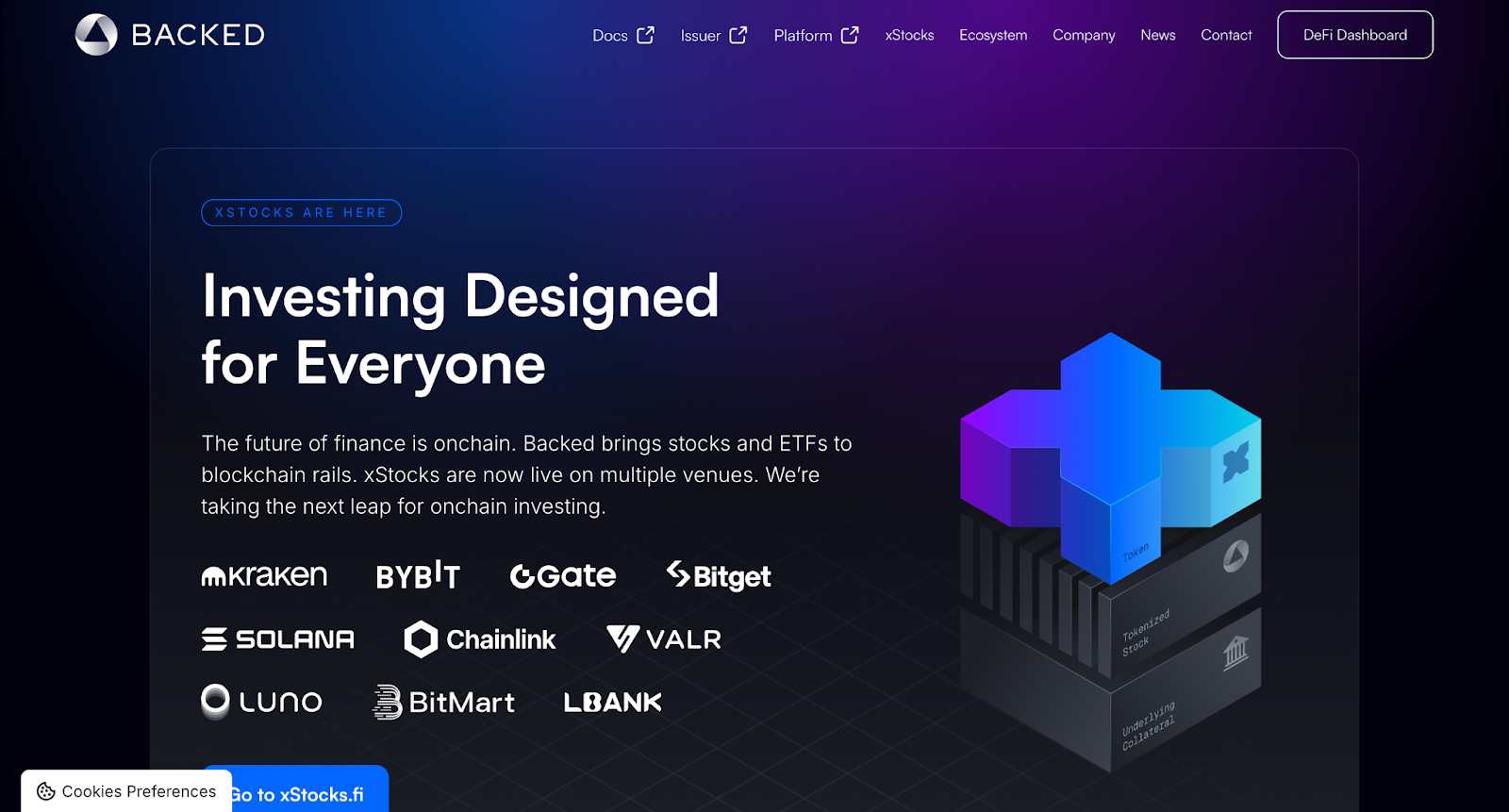
Backed Finance issues tokens backed by traditional securities such as ETFs. These products are typically subject to strict regulatory frameworks and often limited to specific investor categories. The structure closely mirrors traditional finance products, with blockchain acting as a distribution layer.
While technologically straightforward, regulatory compliance is the dominant risk factor. Access restrictions and jurisdictional limits play a significant role in usability.
Goldfinch (GFI) — Emerging Market Private Credit
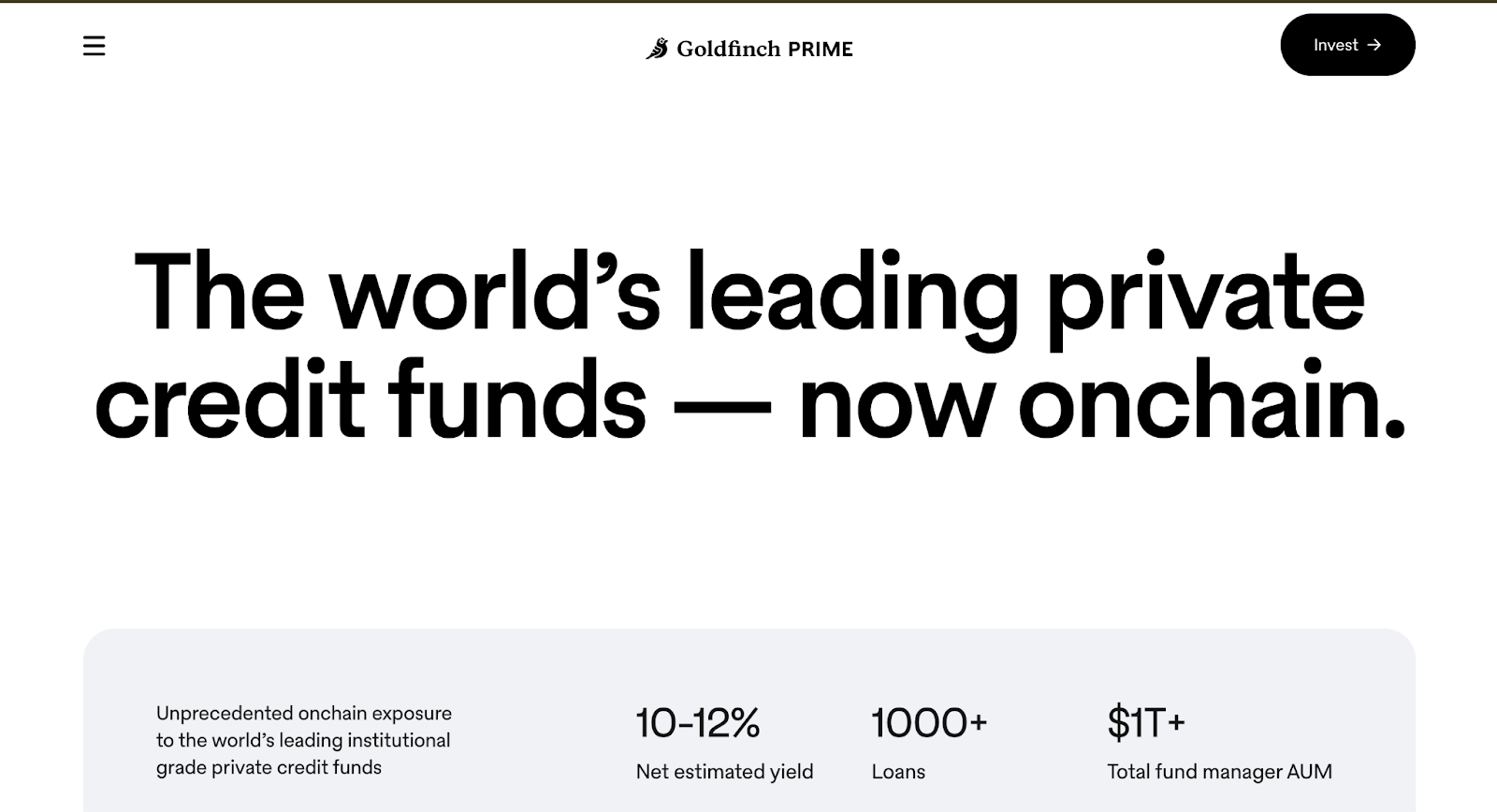
Goldfinch focuses on private credit in emerging markets, providing capital to businesses that lack access to traditional financing. Yield is generated through loan repayments, while risk is tied to borrower performance and regional stability.
This model illustrates how RWA crypto coins can extend financial infrastructure globally, but also underscores the importance of understanding geopolitical and legal risk. Private credit comparison:
This model illustrates how RWA crypto coins can extend financial infrastructure globally, but also underscores the importance of understanding geopolitical and legal risk. Private credit comparison:
Main Risks and Regulatory Issues with RWA Crypto Coins
Despite their appeal, RWA crypto coins introduce structural risks that differ fundamentally from DeFi-native assets. Regulatory classification is one of the most significant challenges, as many RWA tokens may be considered securities under local laws.
Issuer and custody risk is equally critical. Token holders rely on off-chain entities to manage assets properly and remain solvent. In insolvency scenarios, legal outcomes may be uncertain or delayed. Additionally, jurisdictional restrictions and KYC requirements can limit accessibility and secondary market liquidity. Even technically sound projects may face adoption barriers due to compliance constraints.
How RWA Tokens Fit Into a Crypto Portfolio (High-Level View)
Conceptually speaking, RWA tokens could be viewed as a means of attaining additional assets within your portfolio that replicate some of the characteristics typically associated with cash equivalents, interest-bearing instruments (income), or diversification. They should decrease the level of volatility exposed to crypto-native assets while still allowing for the benefits associated with settlement on the blockchain and the ability to composite such assets together with other assets on the blockchain.
On the other hand, real world asset tokens will also raise issues regarding compliance (including tax considerations) as well as personal eligibility. For most users, RWA tokens 2026 will be seen as an additional form of investment that complements, but will not necessarily replace, their traditional investment portfolios or DeFi strategies. Understanding your own level of risk tolerance and potential regulatory exposure is key when evaluating any RWA token investment.
How FINPR Helps RWA and Tokenization Projects Communicate Their Value
Best RWA crypto projects will encounter unique communication challenges given the tremendous complexity associated with the legal and financial aspects of their business. Effectively communicating the structure, compliance, and risk associated with these projects in a manner that does not overwhelm users will require specialised knowledge.
Through partnerships with crypto, DeFi, and institutional Web3 projects, FINPR has developed a unique set of narrative elements to communicate effectively the importance of tokenisation, regulation, and real-world utility for sophisticated individuals. Our efforts include media relations, thought leadership, and the creation of or advisory on content that is specifically developed for sophisticated audiences.
Effective communication is essential for RWA projects. It is a critical part of creating credibility for the company. We assist teams with developing meaningful value propositions while at the same time aligning their marketing strategy with the reality of regulatory requirements.

